01
Visible Veins
Twisted, bulging, rope-like veins that are dark purple or blue in appearance.
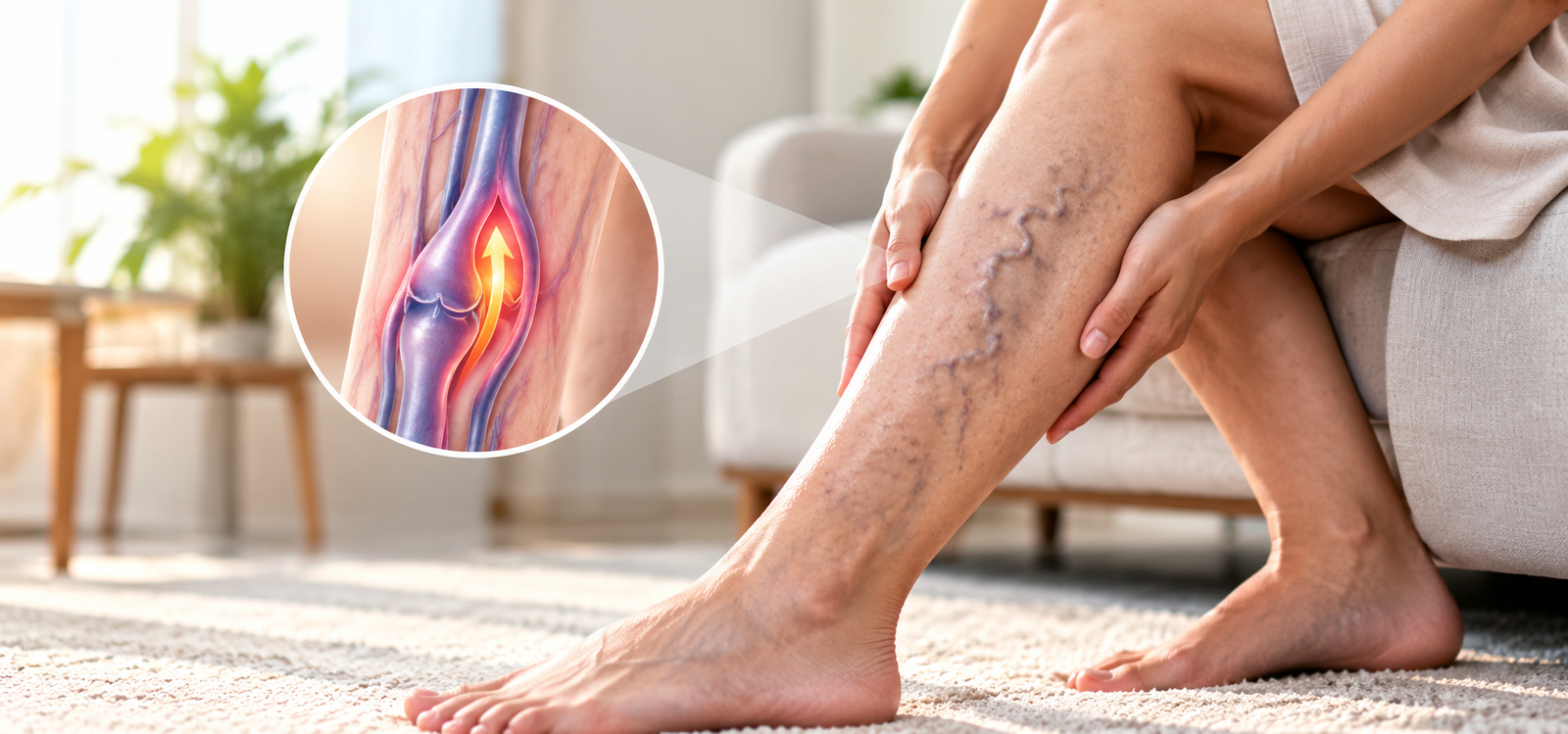
Varicose veins are dilated, tortuous superficial leg veins caused by valve failure and reflux that allow blood to pool in the leg. They commonly cause aching, heaviness, and visible bulging veins; they can also progress to dermatitis, bleeding or ulceration in advanced cases.
While often considered a cosmetic concern, varicose veins can indicate underlying venous insufficiency that may lead to more serious complications if left untreated. Our comprehensive approach focuses on both symptom relief and addressing the root cause of venous reflux.
Common symptoms
Recognizing the signs early can help identify venous problems and support timely evaluation and appropriate treatment.
Twisted, bulging, rope-like veins that are dark purple or blue in appearance.
Dull aching, throbbing, or cramping in the legs that worsens after sitting or standing.
A feeling of heaviness or fatigue in the legs, especially toward the end of the day.
Swelling in the feet and ankles that may become more noticeable in warmer weather.
Itching around one or more affected veins, sometimes accompanied by skin discoloration.
Skin discoloration, inflammation, or dryness may develop around affected veins.
The diagnostic process evaluates blood flow, valve function, venous reflux and the condition of the affected veins. These findings help create an individualized treatment plan.
The legs are examined for visible veins, swelling, skin changes, tenderness and other signs of venous disease.
Ultrasound assesses blood flow, valve function and reflux while helping map the affected veins before treatment.
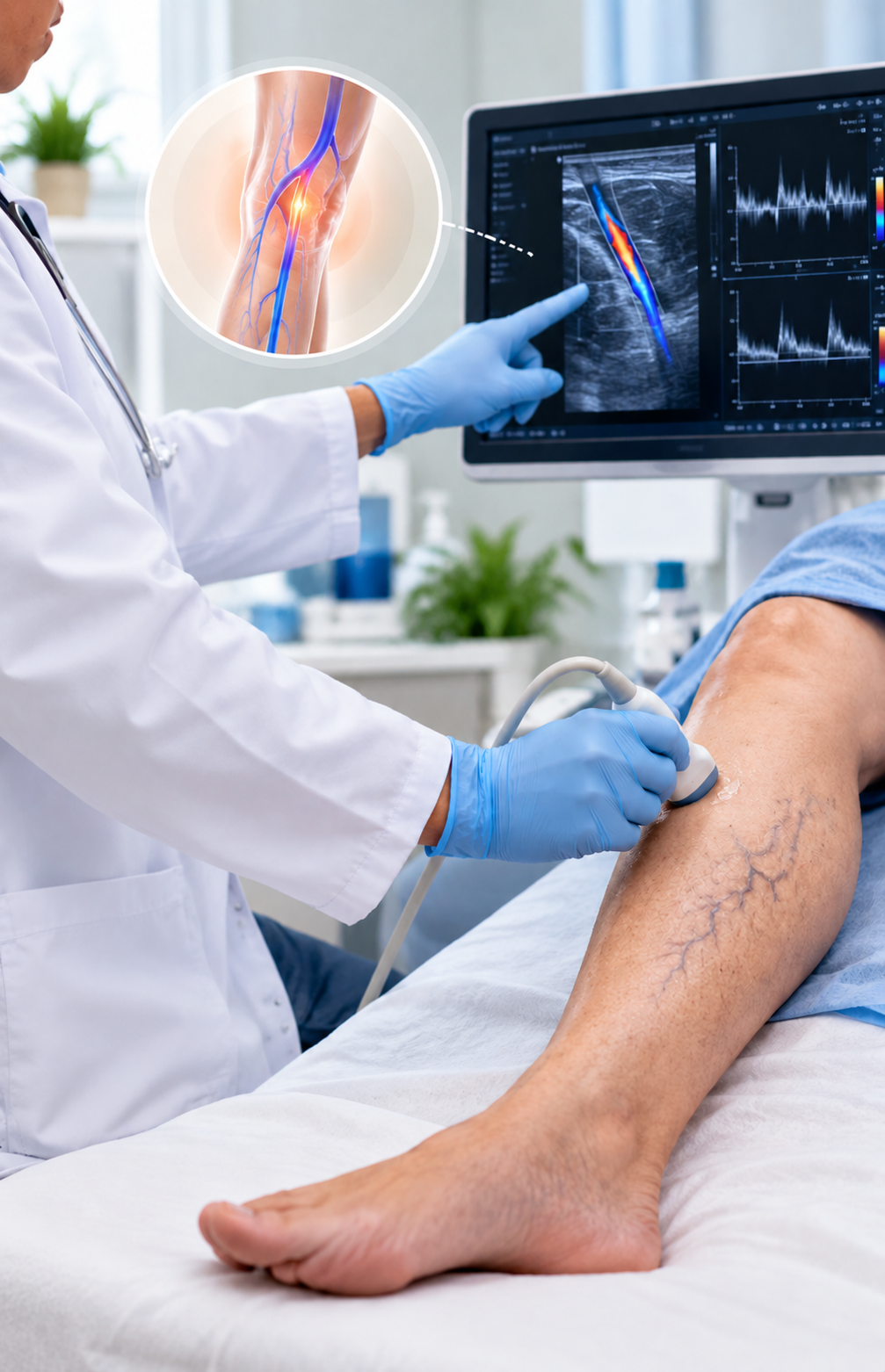 Vascular Ultrasound Assessment
Doppler evaluation provides information about blood movement through the veins and helps identify abnormal flow.
When additional imaging is required, a venogram can provide a detailed view of the venous system and help evaluate complex cases.
Treatment is selected based on the severity of symptoms, vein anatomy and ultrasound findings. Modern minimally invasive techniques can help treat affected veins with less disruption and a smoother recovery.
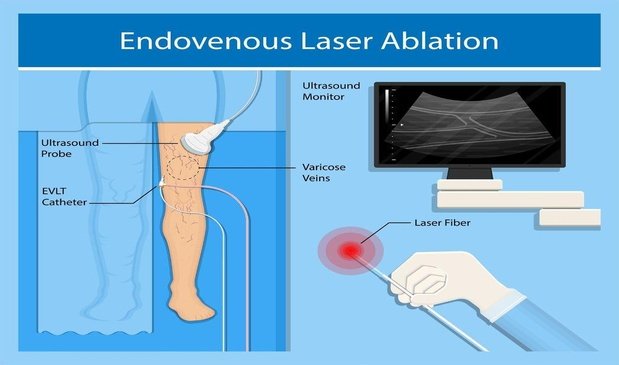
Minimally invasive procedure using laser energy to seal faulty veins. A thin laser fibre is guided into the affected vein under imaging guidance. Controlled heat closes the vein so blood can redirect through healthier veins.
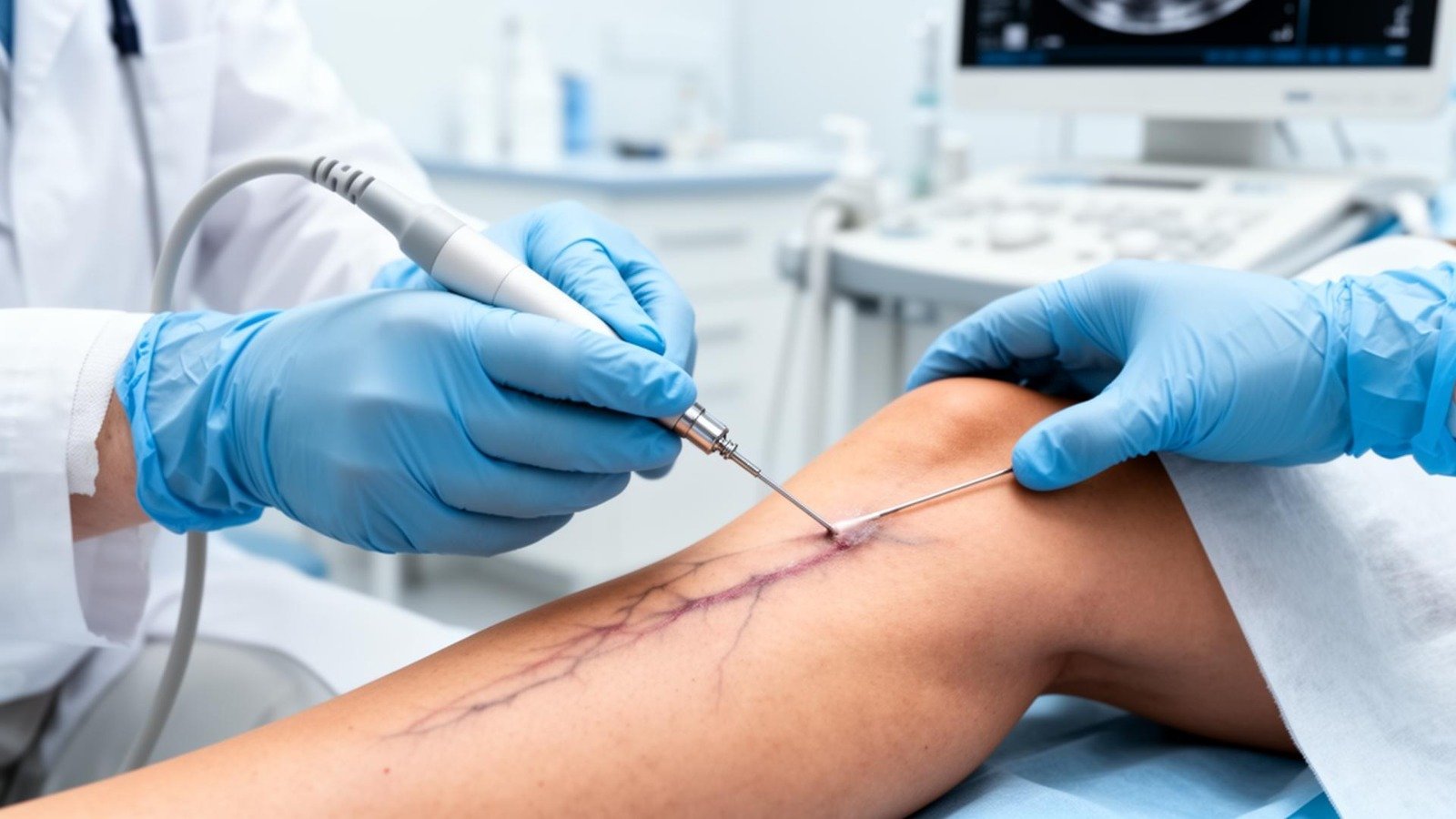
Uses radiofrequency energy to heat and collapse problematic veins. Controlled radiofrequency energy is delivered to the vein wall, allowing the treated vein to close while circulation continues through healthier pathways.
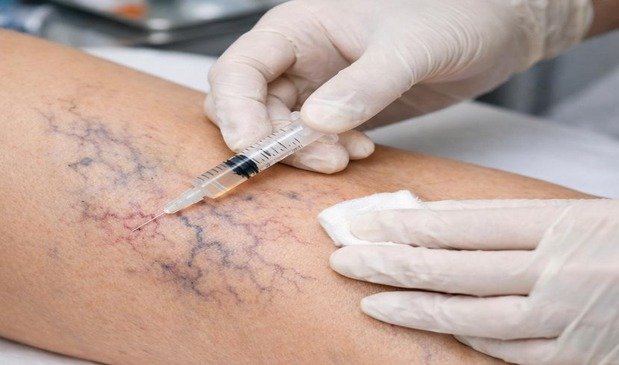
Injection of solution that causes veins to collapse and fade from view. A specially selected solution is injected into targeted veins, helping the vessel close and gradually become less visible.
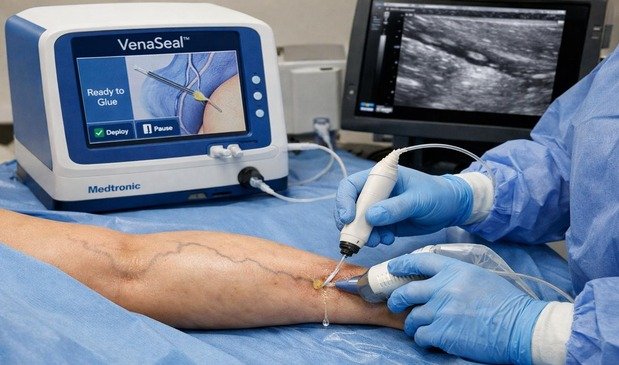
Medical adhesive delivered to close veins without heat or anesthesia. The adhesive is delivered through a catheter into the targeted vein, closing the vessel without the thermal energy used in traditional ablation techniques.
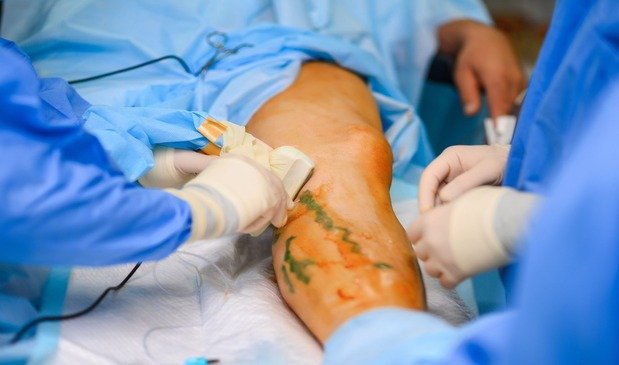
Removal of surface veins through tiny incisions with special hooks. The technique can be used to remove prominent surface varicose veins through very small skin openings and is commonly performed as an outpatient procedure.
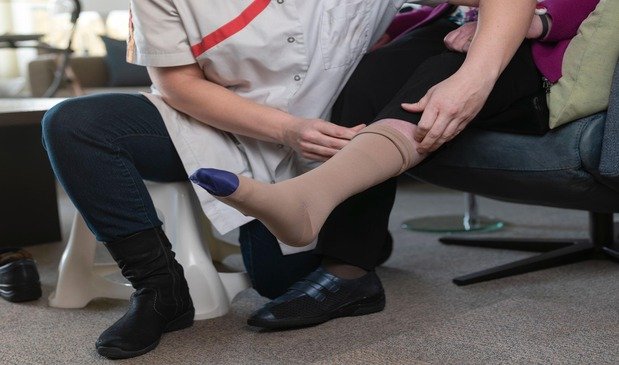
Medical-grade stockings that apply pressure to improve circulation. Graduated compression can help support venous blood flow and may reduce symptoms such as aching, swelling and heaviness in the legs.